post

Health in America: A 60 Year Retrospective

Health in America: A 60 Year Retrospective

In 1960, the obesity rate in America was 13%. Today, it hovers near 45%. Nearly one in four children aged 2–19 is obese — compared to just 5% in 1970. And 31% of children aged 3–17 now live with at least one chronic health condition, versus roughly 2–3% five decades ago. Something changed with the health in America. And the evidence points to a specific turning point: the rise of the low-fat diet era and the dramatic restructuring of the American food supply that followed.

This isn’t a story about personal choices. It’s a story about policy, science, and what happens when government recommendations shape an entire nation’s relationship with food.

The 1960s Baseline: A Healthier Starting Point

In 1960, obesity in America was 13%. By 1970, it had barely moved — just 13.3%. For all the cultural upheaval of that decade, America’s physical health was relatively stable. People ate whole foods, cooked at home, and consumed full-fat dairy as a matter of course.

Then came the politics of nutrition.

How Food Policy Was Born: The McGovern Committee

Between 1965 and 1975, six U.S. senators died in office from coronary heart disease. Between 1960 and 1970, 15 congressional members died of heart disease, with another 10 in the 1970s. These deaths alarmed Senator George McGovern (D-SD), who chaired the United States Senate Select Committee on Nutrition and Human Needs.

Rather than focusing on the deceased members’ well-documented consumption of alcohol and tobacco, McGovern turned his attention to the American diet.

He had scientific cover for this pivot. In 1967, the New England Journal of Medicine published a two-part review by Harvard researchers titled “Dietary Fats, Carbohydrates and Atherosclerotic Disease.” The review downplayed sugar’s role in heart disease while concluding there was “no doubt” that reducing dietary cholesterol and saturated fat — and increasing polyunsaturated fats — was the key dietary strategy for preventing coronary heart disease. It would later emerge that the Sugar Research Foundation had funded the research, raising significant questions about its independence.

The McGovern Committee’s 1977 dietary guidelines formalized this thinking into national policy: eat less fat, eat more carbohydrates. The low-fat era had officially begun.

What Changed on Supermarket Shelves

The government’s new food pyramid made fat the enemy and carbohydrates the foundation of a healthy diet. The effects rippled through the entire food supply almost immediately.

Dairy fat content in whole milk was reduced from 4% to 3.25% through updated federal standards. The 1970s saw the mainstream arrival of 1% and skim (0% fat) milk on supermarket shelves. Schools began replacing whole milk in cafeterias with low-fat and skim alternatives.

Low-fat prepared foods exploded across the market. There was just one problem: removing fat also removed flavor. Food manufacturers solved this by adding two things in its place: sugar and artificial food coloring.

The use of artificial food coloring increased by approximately 467% in this period. Added sugars became ubiquitous. Low-fat yogurt, low-fat salad dressings, low-fat cookies — the “health food” aisles were filled with products loaded with sugar and synthetic ingredients.

The Sugar Problem: Short-Term and Long-Term Effects

As fat disappeared from processed foods, sugar consumption per capita increased by roughly 60% between the late 1960s and today. The health consequences have been significant and wide-ranging.

Short-Term Effects of Excess Sugar

  • Blood sugar spikes and crashes
  • Increased inflammation
  • Energy fluctuations
  • Accelerated tooth decay

Long-Term / Chronic Effects of Excess Sugar

  • Weight gain and obesity
  • Insulin resistance and type 2 diabetes
  • Non-alcoholic fatty liver disease
  • Cardiovascular disease and elevated LDL cholesterol
  • Metabolic syndrome and high blood pressure
  • Increased risk of gout, kidney disease, and accelerated cognitive decline
  • Mental health impacts: research has linked chronic high sugar intake to depression, mood instability, and anxiety, with some studies suggesting sugar activates brain reward pathways in ways that reinforce compulsive consumption
  • Disrupted gut health and increased intestinal permeability

High Fructose Corn Syrup: A Different Kind of Sugar

Compounding the sugar problem was a new sweetener that arrived in American food in the 1970s: high fructose corn syrup (HFCS).

Its origins trace to 1957, when scientists discovered an enzyme called glucose isomerase, which converts the glucose in corn syrup into fructose — making it significantly sweeter. Commercial production scaled up in the late 1960s. When U.S. sugar prices spiked in the 1970s due to import quotas and global market disruptions, food manufacturers turned to HFCS as a dramatically cheaper alternative. American corn surpluses made it even more economically attractive.

The metabolic concern with HFCS lies in how the body processes fructose. Regular sucrose and glucose are metabolized primarily by the small intestine. Fructose, however, is metabolized primarily by the liver, where it is converted into fat and triglycerides. Research suggests that excessive fructose consumption can burden the liver over time, contributing to non-alcoholic fatty liver disease and broader metabolic dysfunction.

Food Coloring: An Overlooked Concern

To make low-fat food more visually appealing, synthetic dyes were added at an unprecedented rate. Several of the artificial colors widely used in the U.S. — including Red 40, Yellow 5, Yellow 6, and Red No. 3 — have been banned or restricted in European countries due to research linking them to hyperactivity in children and other purported health concerns including ADHD, asthma, and even cancer.

The U.S. has historically taken a different regulatory stance, though this is beginning to shift as public awareness grows and new research accumulates.

Health in America Today

The numbers tell a clear story:

  • Adult obesity: ~13% in 1960 → nearly 45% today
  • Childhood obesity: ~5% in 1970 → 22.5% today (ages 2–19)
  • Children with at least one chronic condition: ~2–3% in 1970 → 31% today (ages 3–17)

These are not the numbers of a nation eating too much fat. These are the numbers of a nation that replaced fat with sugar, whole ingredients with processed substitutes, and flavor with artificial color. It does not take a scientist to conclude that America’s health has been on a downfall since the 1970s, and that something needs to be done. For roughly half-a-century, America has gone in the wrong direction when it comes to health, nutrition, and food as a whole.

What Will America Do Moving Forward?

The phrase Make America Healthy Again — associated with current HHS Secretary Robert F. Kennedy Jr. — carries political baggage in today’s climate. At Classic Cooking, we have no interest in that debate. We see this as a matter of well-being, happiness, and personal prosperity plain and simple. The data predates any political figure and will outlast all of them.

The trajectory is hard to ignore. When the U.S. Dietary Guidelines formally arrived in 1980, and the Food Guide Pyramid followed in 1992 with 6–11 daily servings of bread, cereal, rice, and pasta at its base, American eating patterns shifted accordingly: more refined grains, more added sugars, more ultra-processed food, and fewer nutrient-dense whole foods. Obesity among adults has since tripled. Heart disease remains the leading cause of death in the country, with obesity-linked cardiovascular mortality more than doubling in recent decades. Perhaps most telling is the international comparison: U.S. life expectancy sits around 78.4 years — roughly four years behind the average of peer OECD nations, most of which have obesity rates near 25% versus America’s 42–43%, and diets that lean far less heavily on processed food. Medical technology has never been more advanced. The health outcomes have never been more disappointing.

But outcomes are not destiny. Americans have every capability to eat better, feel better, and live better — it doesn’t require a government overhaul or a radical lifestyle change. It requires the initiative to enjoy real, actual food: food that tastes like something, food with ingredients you can pronounce, food worth sitting down for. That’s where a fulfilling, purposeful relationship with what you eat begins.

What You Can Do: Cook Real Food

Understanding this history of the health in America changes how you look at a grocery store. It also changes how you look at cooking.

When you cook from scratch — with whole ingredients, real fats, fresh produce, and no hidden additives — you sidestep most of what went wrong in the American food supply over the 60 years. You know exactly what’s in your food because you put it there.

A few practical shifts make a significant difference:

  • Cook with real fats — butter, olive oil, avocado oil — rather than low-fat substitutes
  • Read ingredient labels and treat added sugars (and HFCS specifically) as a red flag
  • Choose whole-fat dairy over low-fat versions engineered to compensate with additives
  • Minimize ultra-processed foods, which are almost universally high in added sugars and synthetic ingredients
  • Build a cooking repertoire — even a handful of reliable homemade meals gives you far more control over what goes into your body than any packaged alternative

This is exactly why we teach cooking the way we do at [Your School Name]. Every class is built around whole, real ingredients — understanding where flavor actually comes from, how fat, acid, heat, and salt work together, and why cooking from scratch produces food that’s both better tasting and better for you. When you understand what happened to the American food supply over the last 60 years, cooking from scratch stops feeling like a hobby and starts feeling essential.

Interested in learning? Explore our recreational cooking classes, kids and teen camps, and private events — all focused on real food, real techniques, and real flavor.

“Health in America: A 60 Year Retrospective” – A Written Statement by Pascal Dionot

Health in America: Sources & Further Reading

  • Kearns CE, Schmidt LA, Glantz SA. “Sugar Industry and Coronary Heart Disease Research.” JAMA Internal Medicine, 2016.
  • CDC National Center for Health Statistics: Obesity prevalence data (1960–2024)
  • Lustig RH. “Fructose: Metabolic, Hedonic, and Societal Parallels with Ethanol.” Journal of the American Dietetic Association, 2010.
  • USDA Dietary Guidelines for Americans — historical editions (1977, 1980, 1992, 2020)
  • European Food Safety Authority (EFSA): Opinions on food color additives and child behavior

Links

Click here to view more of our blog posts.
Click here to view our upcoming classes on our calendar.

Click here to visit our Instagram page.

post

Why a Weekly In-Person Cooking Program Is the Best Investment You Can Make in the Kitchen

By Jeff Dionot | March 11th, 2026 | Scottsdale, Arizona

You’ve bookmarked the recipe. You’ve saved the Reel. You’ve watched the TikTok three times and paused it at every step. And yet — somehow — the dish never turns out quite right. Sound familiar? 

Discover why a weekly in-person cooking program in Arizona beats online tutorials — build real kitchen skills, save money, and learn culinary secrets from professional chefs. Explore our programs today.

Millions of home cooks find themselves stuck in this loop: endlessly scrolling through social media tutorials, collecting recipes they never finish, and wishing they actually knew what they were doing in the kitchen. The good news? There’s a smarter path. A weekly in-person cooking program doesn’t just teach you recipes — it transforms the way you think about food, cook at home, and experience the culinary world. Here’s why enrolling in a structured, ongoing cooking series is one of the best decisions you can make this year.


The Problem with “Just Looking It Up”

Social media has made cooking content more accessible than ever. A new recipe is always one scroll away. But accessibility and education are two very different things — and that gap is exactly where most home cooks get stuck.

When you follow a TikTok tutorial or watch an Instagram cooking video, you’re learning that dish, not that skill. You’re following instructions, not building intuition. The moment you step away from the screen and face a pan full of onions that won’t stop burning, or a sauce that won’t thicken no matter what you do, you’re on your own. No comment section can walk you through it in real time.

Online recipes and tutorials also come with hidden costs: missing context, missing technique, missing the why behind every step. Why do you salt pasta water? Why does searing meat matter? Why does resting chicken after cooking change the texture? These are the questions that turn a recipe-follower into a real cook — and they’re exactly the kinds of questions that get answered inside a well-run weekly cooking program.

In-person instruction is fundamentally different. An experienced chef instructor can watch your knife grip and correct it before it becomes a bad habit. They can smell your pan before you do and tell you to turn down the heat. They can guide you through the moment something goes wrong — and teach you why it went wrong so it doesn’t happen again. That kind of real-time, hands-on feedback simply cannot be replicated by a 45-second video.


Why A Weekly Cooking Program Work Better Than One-Off Classes

A single cooking class is a fun night out. A weekly cooking series is a genuine education.

The difference comes down to how people actually learn complex skills. Cooking — real cooking — is a combination of muscle memory, sensory awareness, timing, and judgment. These things develop through repetition and reinforcement, not through one afternoon of chopping onions. Weekly programs are specifically designed to build on each session, layering new skills on top of what you learned the week before and giving you time in between to practice at home.

By the end of a multi-week series, students don’t just remember a handful of recipes. They’ve internalized techniques — how to properly sauté, how to build a sauce from scratch, how to balance flavors — that they can apply to anything they cook for the rest of their lives. That’s the difference between information and knowledge, and it’s what separates a cooking class from a cooking education.

There’s also a powerful accountability factor. Knowing you have class every week keeps you engaged with cooking between sessions. You practice. You experiment. You come back the following week with real questions. That cycle of instruction, practice, and feedback is the engine behind genuine skill development — and it’s built right into the structure of a weekly program.


The ROI Is Real: Skills That Pay for Themselves

Let’s talk about value, because this is where weekly cooking programs really shine.

The average American household spends a significant amount of money on dining out and food delivery each year. A substantial portion of that spending isn’t driven by desire — it’s driven by not knowing what to make with what’s already in the fridge. When you develop real cooking fundamentals, that dynamic shifts entirely.

Graduates of weekly cooking programs consistently report being able to:

  • Cook confidently from whatever’s on hand, without needing a specific recipe or a special ingredient run
  • Shop smarter, buying seasonal, affordable staples and knowing how to turn them into multiple meals
  • Reduce food waste, because they understand how to use every part of an ingredient and repurpose leftovers creatively
  • Recreate restaurant-quality meals at home, at a fraction of the cost

Think about it this way: if a weekly cooking program teaches you skills that allow you to cook at home even two or three more times a week than you did before, the savings on takeout and delivery add up fast. The program essentially pays for itself — and then keeps paying dividends for years, because the skills never expire.

Beyond the financial return, there’s the return on your time. Learning to cook efficiently means knowing how to prep smarter, how to batch-cook, and how to build meals around techniques rather than rigid recipes. That kind of kitchen fluency turns cooking from a stressful nightly chore into something you can actually enjoy.


You’re Not Just Learning Recipes — You’re Getting an Education in Food

One of the most underrated benefits of a quality in-person cooking program is everything that happens around the cooking itself.

Great culinary instructors don’t just walk you through a dish — they give you the story behind it. Where did this ingredient come from? How has this regional cuisine evolved over centuries? Why does this dish mean so much to the culture it came from? This kind of culinary context changes the way you experience food, both in the kitchen and when dining out.

At our cooking school, instructors cover:

The history and heritage of food. Every dish has a story. Understanding the origins of what you’re cooking — the geography, the culture, the trade routes that brought certain spices halfway around the world — deepens your appreciation and your creativity as a cook.

What’s happening in the food industry right now. From sustainability and farm-to-table practices to what’s happening in the fine dining world and emerging culinary trends, our instructors keep students plugged into the living, breathing conversation happening in kitchens around the world.

How to taste like a professional. There’s a skill to recognizing what separates a good dish from a great one — the balance of salt, acid, fat, and heat; how texture plays against flavor; what it means for a dish to feel “complete.” These are the kinds of tasting and evaluation skills that most home cooks never develop, but they’re completely learnable — and they change everything about how you cook and how you eat.

The kitchen secrets that chefs actually use. Every working chef has a mental library of tricks that never make it into cookbooks or social media posts. How to get restaurant-quality searing at home. The small adjustments that rescue a dish that’s gone sideways. The seasoning habits that separate a home cook from a professional. These are the insights our instructors bring from real kitchen experience — and they’re the kind of edge that’s impossible to Google.


The Community You Don’t Expect (But Can’t Imagine Cooking Without)

Here’s something no tutorial can offer: the people in the room with you.

Weekly cooking programs build genuine community. You’re learning alongside others who share your curiosity and enthusiasm for food. You swap notes on what worked and what didn’t. You encourage each other through the messier moments. You share a meal together at the end of class — and there’s something uniquely bonding about that.

For many of our students, the relationships built in our weekly series last well beyond the final class. Former students cook together, share recipes, and keep each other inspired in their home kitchens. That social layer makes the learning stickier, the experience more enjoyable, and the journey more memorable.


Confidence Is the Ingredient That Changes Everything

Ultimately, what a weekly cooking program gives you above everything else is confidence.

Confidence to open the fridge and improvise a meal from what’s there. Confidence to host a dinner party without stress. Confidence to try a new cuisine, a new technique, a new flavor combination — and to know that even if it doesn’t go perfectly, you have the skills to understand what happened and do better next time.

That confidence is built deliberately, over weeks, through guided instruction, real practice, and the kind of supportive learning environment that only comes from showing up in person, with an expert in the room.


Ready to Take Your Cooking to the Next Level?

Our weekly cooking programs in Arizona are designed for every level of home cook — from total beginners to experienced cooks who want to sharpen their technique and expand their culinary knowledge. Each series is led by seasoned instructors who bring both professional kitchen experience and a genuine passion for teaching.

Whether you’re cooking for yourself, your family, or looking to seriously level up your skills, there’s a program here for you.

[Explore Our Current Weekly Programs!]

[Visit Our Instagram Page to See How Our Prior Programs Looked Like!]

Classic Cooking Academy

Scottsdale, Arizona | www.ccacademy.edu | 480-502-0177


Tags: cooking classes Arizona, weekly cooking program, in-person cooking school, learn to cook, culinary education, cooking classes near me, cooking school Phoenix, kitchen skills, beginner cooking classes, adult cooking classes Arizona

post

Stirring Up Success: Why Hands-On Cooking Classes Are the Ultimate Team Building Experience

Cooking Class Team Building Events – A Delicious Spin on Corporate Outings

Corporate team-building activities are essential for strengthening relationships, fostering collaboration, and boosting morale within an organization. While traditional team-building exercises, such as trust falls or problem-solving challenges, have their place, hands-on cooking classes offer a unique and highly effective alternative. Combining creativity, teamwork, and a shared goal, cooking classes provide an engaging and memorable experience that strengthens communication, boosts employee morale, and encourages problem-solving in a relaxed and enjoyable setting. In this blog post, we’ll explore why hands-on cooking class team building events are an ideal way to foster camaraderie while still providing a fun and delicious outing!


Links:

For more information on our corporate team building classes, click here!

To see how prior team building events at Classic Cooking looked like, click here!

To view our other blog posts, click here!

post

Is Cereal Good For You?

By: Heidi Wagenbach

Cereal is great and I love it. 

Most of the time, I eat it for breakfast with a separate glass of milk because I prefer my cereal dry (soggy cereal is a disgusting mess, am I right?). I select the so-called “healthier” options, and leave the sugary ones like Cinnamon Toast Crunch for an occasional after-dinner dessert/snack. 

But I started to wonder if cereal even qualifies as a good option for the crucial morning meal, seeing that every time I go to work with a belly full of flakes and granola, I’m really hungry before lunch. Peanut butter or eggs stick with me for a longer period of time, but I’m finding an unwillingness to work hard early in the morning when I have the luxury of just pouring from a box and crunching away. So let’s dig deeper into what cereal has to offer… or lacks.

Behind The Bran

There are five major steps to how cereal is made, the first being that the selected grains are processed into a fine flour and cooked. Mixing is second, where ingredients like sugar, cocoa, water, etc. are added. Extrusion is third on the list, which is a high temperature process that uses a machine to craft cereal. The cereal is then dried and transformed into whatever magical shapes the producer wants whether that be squares, spheres, or stars.

So What Are The Health Risks Of Cereal? 

Added sugar is the biggest culprit. Processed foods, which include cereals, have a high amount of unnatural sugar; most brands list this ingredient as second or third on the nutrition label. This isn’t great for your body because your blood sugar spikes, and insulin levels increase. You will crave another high carb meal after digesting the cereal quickly, and risks creating a vicious cycle of overeating. The possibility of developing type 2 diabetes, heart disease, and cancer becomes very real if this process is repeated consecutively.

Misleading Marketing

Another aspect of this healthy vs. unhealthy debate is that cereal brands falsely advertise. Their products are stated to be healthy with key words like “low fat” and “whole grain” on the packaging. Cereals are most often consumed by children who find their mascots like Tony the Tiger and bright colors appealing, so the rate of childhood obesity and other diet-related diseases begin with what they eat for breakfast/what their parents provide. Greaaaat.

The AHA And Scientific Studies

On average, people consume twice as much cereal as the serving size. (Let’s be real: no one measures out their cereal, and when there’s a little milk left, they go back for seconds). Cereals don’t give you sufficient nutrition and energy that your body needs because of the excessive and unnecessary amount of carbs and sugar. 

In a UCLA study, there were 54 overweight teens who were monitored after reducing the added sugar in their diet by 40g a day (equivalent to 1 can of soda). They showed a reduction in belly fat and an improvement of insulin function. Another experiment involved rats; those who regularly consumed a high-sugar diet had changes in the levels of oxytocin (the hormone responsible for satiety), thus their mental health began to decline. 

Here’s a simple formula to help you understand better: more processed sugar = more chronically unsatisfied we become = more we eat.

The American Heart Association (AHA) recommends that the daily intake of added sugars should be limited to 25g for women; 36g for men. Most cereals have a generous amount of sugar that equates to half or more of your daily recommended amount. 

Just take a look at the next section.

Popular Cereal Nutritional Facts

Raisin Bran Two Scoops

1 cup: 190 calories, 1g fat, 210mg sodium, 46g carbs, 7g fiber, 18g sugar, 5g protein

Corn Pops

1 cup: 120 calories, 0g fat, 105mg sodium, 27g carbs, 3g fiber, 9g sugar, 1g protein

Corn Pops also contain hydrogenated oils and annatto, a natural colorant found in processed cheese products; a study found that it caused allergic reactions.

Reese’s Puffs

1 cup: 160 calories, 4g fat, 215mg sodium, 29g carbs, 1g fiber, 13g sugar, 2g protein

Reese’s Puffs have food coloring (Yellow 5 and 6), which can lead to ADD in youngsters.

Cinnamon Toast Crunch

1 cup: 170 calories, 4g fat, 240mg sodium, 33g carbs, 2.5g fiber, 12g sugar, 1.5g protein

CTC contains 13 vitamins and minerals, BUT also has BHT, a preservative that “is still highly controversial and limited research exists on whether it is harmful to the body or carcinogenic.”

Golden Grahams

1 cup: 160 calories, 1.5g fat, 320mg sodium (21% of your DV), 36g carbs, 2g fiber, 13g sugar, 2g protein

Fruity Pebbles

1 cup: 147 calories, 1.5g fat, 190mg sodium, 31g carbs, 0g fiber, 12g sugar, 1.5g protein

Fruity Pebbles have hydrogenated vegetable oil, artificial dyes, and preservative BHA. (You’re basically eating a bowl of empty calories with some yummy additives).

Frosted Flakes

1 cup: 147 calories, 0g fat, 200mg sodium, 35g carbs, 1g fiber, 13g sugar, 1.5g protein

(I know, surprising… no fat. But with all that sugar, that benefit is rendered useless). 

Lucky Charms

1 cup: 147 calories, 1.5g fat, 227mg sodium, 29g carbs, 2.7g fiber, 13g sugar, 2.7g protein 

Despite whole grains being the first ingredient, Lucky Charms include marshmallows aka sugar, plus corn starch, corn syrup, dextrose, gelatin, food dyes, and artificial flavor.

Cocoa Puffs

1 cup: 133 calories, 2g fat, 200mg sodium, 31g carbs, 2.7g fiber, 13g sugar, 2g protein

Captain Crunch’s Crunch Berries

1 cup: 147 calories, 2g fat, 253mg sodium, 29g carbs, 1.5g fiber, 15g sugar, 1.5g protein

Apple Jacks

1 cup: 110 calories, 1g fat, 135mg sodium, 25g carbs, <1g fiber, 12g sugar, 1g protein

Apple Jacks’ first ingredient is sugar, plus hydrogenated oil, BHT, and color/flavor additives. 

cereal

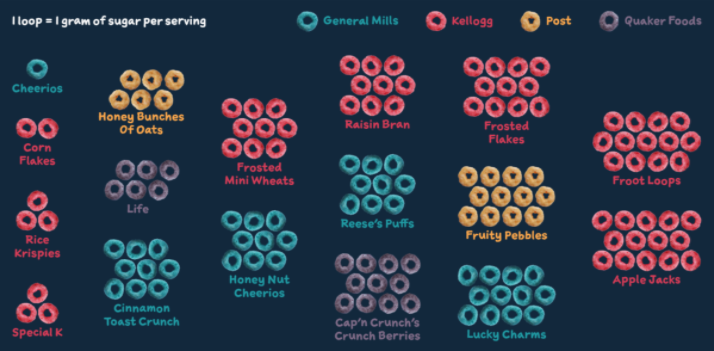
A visual representation of sugar vs. cereal in popular brands. Do you see your favorite? If not, maybe that’s a good thing!

How To Be Healthier About Your Breakfast

Limiting sugar in your chosen cereal is obvious, but you can look for high fiber (which will keep you fuller longer). Pay attention to portions, read the ingredients list, and opt for high protein or simply remove ready-to-eat breakfast cereals from your diet. If you absolutely cannot fathom doing so (like me), reduce weekly cereal consumption and watch the serving size. Choose unprocessed breakfasts the majority of the time (like oatmeal, homemade granola, yogurt, or eggs). These foods are high in protein, healthy fats, nutrients, and will boost weight loss. You will feel fuller and possibly lose up to 65% more weight.

Conclusion

Okay, here’s my opinion: don’t eat cereal every day; if you exercise and top it off with fruits/nuts/milk, you have nothing to worry about. I honestly believe that there are worse breakfast foods for you out there (PopTarts, for instance). Cereal, if you choose the right brand, has good nutrition and protein that will help tackle your day. Don’t be a kid and go for the brightly colored stuff, and if you have kids yourself, encourage them to eat wholesome foods as well. By cooking for them and then eventually teaching them how to prepare their own meals, they’ll be more self-sufficient later on. I’m that weirdo who liked brussel sprouts and meatloaf when I was younger so I guess I’m already well adapted to choosing healthier foods, even if I splurge occasionally to curb my sweet tooth. 

Sources: 

Breakfast Cereals: Healthy or Unhealthy

I Stopped Eating Cereal and Here’s Why… 

The 28 Worst Breakfast Cereals – Ranked! 


Feel free to leave a comment with your own thoughts or questions!

post

Sugar Has a Similar Chemical Compound to Cocaine

By: Jeff Dionot

Foods laden with sugar are considered some of the most addictive meals of them all. When asking people if they have a hankering for a certain selection of dishes, they most commonly answer that they have a sweet-tooth; they often crave and relapse back into a sugary diet – two behaviors that are critical components of addiction according to Bart Hoebel of Princeton University. The reason for this is that sugar can be as habit-forming (and as harmful in the long-run) as drugs of abuse – specifically cocaine.

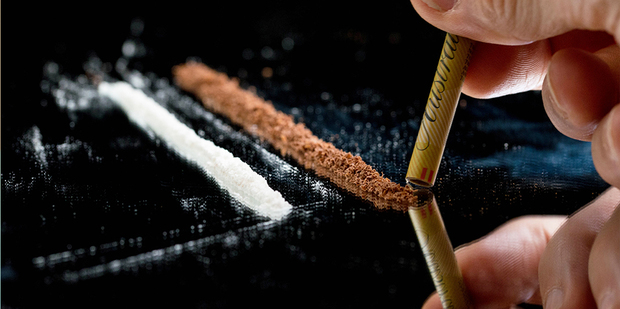
Dr. David Reuben, author of Everything You Always Wanted to Know About Nutrition says, “White refined sugar is not a food. It is a pure chemical extracted from plant sources, purer in fact than cocaine, which it resembles in many ways. It’s true name is sucrose and its chemical formula is C12H22O11. The chemical formula for cocaine is C17H21NO4… For all practical purposes, the difference is that sugar is missing the ‘N’, or nitrogen atom.”

Besides the chemical composition of the two, sugar and cocaine share numerous similarities. Both have comparable appearances, both give consumers similar effects, and both are incredibly lucrative to their respective producers and distributors. In terms of effects, sugar and cocaine boost dopamine levels for the recipient. On average, increased dopamine in the body causes higher alertness, focus, happiness, and motivation. If taken to the extreme, the highest levels of dopamine may lead to mania and delusions. Long-term and excessive consumption of both sugar and cocaine results in an overall reduction of dopamine levels, forcing people to consume larger quantities in order to get the same heightened rush.

In terms of finances, the approximate 2018/2019 production of sugar amounted to 179.66 million metric tons. With an average price point of $400 per metric ton, which equates to roughly $71.86 trillion. In 2017, the total global production of 100 percent pure cocaine was only 1,976 tons, but with an aggregate price point of $1 million per metric ton, that results in $1.97 trillion dollars. Big Sugar and drug traffickers also meddle with their products throughout the supply chain in order to save costs and increase sales. Big Sugar might add additional chemicals to sugar to make artificial sweeteners such as Splenda. Drug traffickers almost always set aside some cocaine to dilute or “cut” it with other white powders (laundry detergents, laxatives, etc.), thus increasing weight and profit.

The overall proceeds of sugar dwarfs those of cocaine because of its legality. A cocaine addict usually gets hooked on their illicit substance when they are past adolescence and manage to find a local dealer; a sugar addict may start their dependency as early as early childhood when one too many candies kickstarts their lifelong cravings. There are multiple hurdles to overcome in order to purchase even a gram of cocaine, but the only thing stopping a five-year-old from purchasing a party bag of chocolates is a twenty dollar bill. 

While the issues of addiction are placed more heavily on cocaine, sugar addiction is a much more pertinent, grounded, and widespread problem. Chasing that dopamine is never a worthwhile pursuit. Since there aren’t exactly rehabilitation centers for people with a sugar dependency, the goal of abstinence falls on their shoulders. They themselves have to abandon their habitual cravings if they want to return to baseline normalcy. Recognizing that a problem exists is almost always the first step, followed by abstinence.

For example, take a look at Christine from Freaky Eaters. After a divorce that distanced herself from her husband and children, she resorted to sugar in order to cope with newfound depression and isolation; according to her son, Christine stocks her fridge and pantries entirely with sugary products. After every sugar spree, she deals with headaches and erratic mood changes. She combatted a traumatic situation with an unhealthy solution and the results are none too kind to her.

So if you believe you’re helpless to sugar, try to cut it out of your diet any way you can. Although you can always find people to support your endeavor, abstinence falls mainly on your shoulders alone.

Sources:

https://www.businessinsider.com/sugar-has-a-similar-effect-on-the-brain-as-cocaine-2016-4

https://www.isosugar.org/prices.php

https://kukhahnyoga.com/2010/05/05/sugar-and-cocaine-more-in-common-that-you-think/

https://www.princeton.edu/news/2008/12/10/sugar-can-be-addictive-princeton-scientist-says

https://www.businesswire.com/news/home/20190514005915/en/The-United-States-Sugar-Manufacturing-Market-2019—Industry-Sales-were-10.4-Billion-in-2018—ResearchAndMarkets.com

https://www.statista.com/statistics/249679/total-production-of-sugar-worldwide/#:~:text=In%202018%2F2019%2C%20approximately%20179.66,were%20produced%20in%20total%20worldwide.

https://www.isosugar.org/prices.php

https://www.worldometers.info/drugs/

https://www.independent.co.uk/news/world/americas/cocaine-production-record-levels-colombia-unodc-global-drugs-un-report-a8981616.html

https://twitter.com/USAO_EDPA/status/1141046851132645376?ref_src=twsrc%5Etfw%7Ctwcamp%5Etweetembed%7Ctwterm%5E1141046851132645376%7Ctwgr%5E%7Ctwcon%5Es1_&ref_url=https%3A%2F%2Fwindypundit.com%2F2019%2F06%2Fhow-much-is-16-5-tons-of-cocaine-really-worth%2F

https://pinnaclefitness707.com/blog/view/what-is-the-difference-between-stevia-sucrosesplenda-and-sucralose#:~:text=Sucralose%20or%20Splenda%20is%20the,molecule%20with%20three%20chlorine%20atoms.

https://americanaddictioncenters.org/cocaine-treatment/cut-with

https://www.unodc.org/documents/wdr/WDR_2010/1.3_The_globa_cocaine_market.pdf

https://www.healthline.com/health/dopamine-effects

https://www.youtube.com/watch?v=UReuFZl69qI

post

Cancer Feeds Off Of Sugar

By: Jeff Dionot

Cancer comes in many forms: breast cancer is on the mind for many women; impaired bodily functions in men could point to prostate cancer; and long-term exposure to airborne irritants could pave the way to lung cancer, considered by many to be the worst type of cancer. While there still is no end-all be-all cure, there are multiple preventable measures that could stunt or even prevent cancer entirely. This post will take a look at how limiting sugar in your system can also limit cancer.

Every cell in a person’s body uses blood sugar (or glucose) for energy. A person’s glucose levels depend on their diet which will have an effect as to how their body will develop. A balanced amount leads to a healthier lifestyle; a high amount could lead to a number of physical issues such as fatigue, headaches, and sores; out of control amounts may lead to hyperglycemia or even type 2 diabetes (which 10% of Americans suffer from). Glucose is the basic form of all carbs, so other sugars such as fructose (sugars commonly found in fruit) and lactose (sugars commonly found in milk) end up being converted into glucose. If for some reason there’s no carbohydrates in our diet, cells can turn fat and protein into glucose as a last resort, because they need glucose to survive. Glucose, in short, is the main fuel for our body.

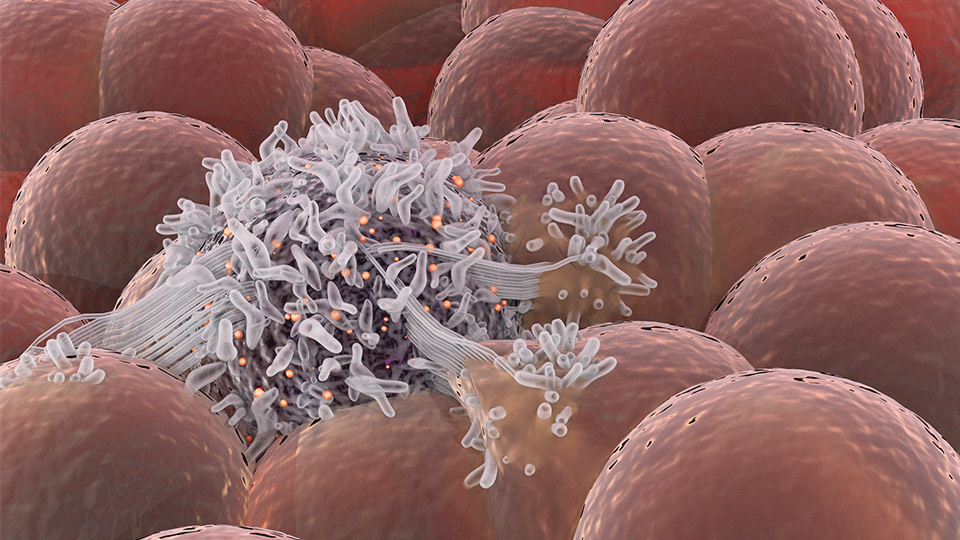
According to WebMD, cancer cells use up 20 times the amount of glucose than normal cells. Cancer cells already multiply around the body faster than expected, but add more sugar than necessary to the situation and the cells proliferate like wildfire. Tumors that once grew slowly now enlarge at an expedited rate when confronted with higher levels of glucose. Cancer researcher Lewis Cantley, PhD, writes that certain cancers may begin with higher levels of insulin, the hormone that controls glucose in the body. When more sugar enters a person’s system, their pancreas secretes more insulin to confront it and break it down. Higher blood insulin may also lead to higher risk of cancer (prostate cancer incidence is 2.55-fold greater in men with the highest blood insulin levels).

That’s not to say that all carbohydrates should be shunned for fear of getting a negative prognosis from your doctor. A plate of pasta or bowl of rice won’t send you straight to death’s door, but unnecessary sugars should be avoided whenever possible. Of Healthline’s “Top Six Cancer Causing Foods”, processed sugars (sugar-sweetened beverages, candies, sugary cereals) are included. Too much added and processed sugars increase the proclivity for type 2 diabetes and obesity whose inflammatory and stressful conditions threaten to develop multiple forms of cancer.

As in most cases, the solution lies in the decisions of the consumer. Eschew sugary foods for healthier alternatives, like whole grains, and put that catabolized energy to use in the form of exercise instead of living a sedentary lifestyle. A person is what they eat but also how they treat their body; if one disparages their physical care, their body will give an appropriate, harmful, and even deadly response. 

Sources:

6 Foods That May Increase Your Risk of Cancer

Cancer and Sugar: Is There a Link?

Deadliest, Most Common Cancers Get the Least Attention in U.S.

The Insulin/Cancer Connection

post

How Stress Affects Your Eating Habits

By: Heidi Wagenbach

“There’s a definite connection between stress and our appetite– but that connection isn’t the same for everyone… Some people overeat when they feel stressed, and other people lose track of their appetite… Those who stop eating are so focused on their stress that they don’t hear their hunger cues… Those who overeat are attempting to distract themselves with food.”

Susan Albers, psychologist 

Hi, Captain Obvious here: we’ve all been stressed before. Whether that be freaking out over a job interview or going on a date, the way your brain and body reacts affects how you process stress. Even if the stressor is positive, you could feel anxiety, depression, and possibly a ravenous hunger. Or, you may shut down entirely (like I do), not wanting to even think about eating when there is so much to do and so little time to do it in. 

Just these past two months, for example, I moved houses. Combine that with taking the Practical and Pastry Series in the evening, renovating the rental, working 30 hours a week, shopping for groceries and furniture, getting my first COVID vaccination (I could go on)…  I was a roller coaster of emotions, eating hardly anything certain days, then craving copious amounts of sweets another. 

Do I think all of those were correlated? Absolutely.

So why do some people eat more and others not at all?

Cortisol: The Stress Hormone

Stress releases cortisol, which in turn makes you crave sugary, salty, and/or fatty foods because the brain thinks it needs the fuel to combat whatever threat is causing stress. Glucose (the primary source of energy) is then subjected to the bloodstream, which triggers the flight or fight response (the old, subliminal survival mode we never got rid of in our years of evolution as a species). Once the threat is gone, our blood sugar drops, and our body works overtime to replenish the energy quickly. Cravings hit, and when we give into indulging chocolate or cake, our bodies are more likely to store the sugar, form abdominal fat, and gain weight. 

Stress slows your metabolism as well. A study conducted showed that participants who reported a stressor within 24 hours burned about 105 calories less than non-stressed people after eating a high-fat meal. This means that there is the potential of gaining 11 pounds over the course of a year if continuing down this stressful path.  

Unhealthy Habits When Stressed

Emotional eating

(Or craving unhealthy food when you’re experiencing a negative emotion like sadness; eating more than you normally would/continuously snacking)

Eating “accessible” or fast food

Exercising/sleeping less

Skipping meals

stress

Overeating

Many adults who overeat say there are undesirable consequences, such as feeling sluggish, lazy, and bad about their bodies.

Statistics:

  • 38% of adults say they have overeaten/eaten unhealthy foods in the past month because of stress, half of them report engaging in these behaviors weekly or more
  • 33% of adults who report overeating or eating unhealthy foods say it’s to distract them from stress
  • 27% of adults say they eat to manage stress; 34% say this is a habit

Undereating

People who chronically undereat have equally damaging symptoms as well, including hair loss, fatigue, constipation, skin problems, and getting ill more often. This could also lead to infertility and/or malnutrition. 

Statistics:

  • In the past month, 30% of adults report skipping a meal because of stress; 41% of adults report skipping a meal weekly or more
  • 67% who report skipping meals attribute it to a lack of appetite; 26% say it’s because they didn’t have time to eat
  • 22% report becoming irritable

How To Help

While stress is a natural part of life and I don’t think there will ever be a world where everyone is carefree and without worry, there are some steps to take that will help you avoid eating poorly or not at all when you feel overwhelmed. 

  1. Be mindful of what triggers stress eating and be ready to fight the urge
  2. Have healthy snacks/eat healthier comfort foods (i.e. popcorn), which will help regulate blood sugar
  3. Exercise regularly
  4. Reduce anxiety where you can (i.e. at work, have a stress ball in your desk drawer or take a few deep breaths)
  5. Drink enough water
  6. Start a food journal (friendly reminder to not limit yourself entirely from the pleasures of life; most diets cause more stress for people when being so regimented)

Conclusion

For a lot of people, the relationship with food is a struggle; it’s a never-ending battle. To either binge or limit food when you’re not feeling hungry, preoccupied with the stress in your life, is not a solution. You shouldn’t feel guilty about nibbling on a rich dessert once in a while if you take care of your body. But if you find that you’re continuously repeating the same unhealthy habits (eating too much, or not enough) over and over again, then something needs to change. I’m feeling a lot better about where I am as opposed to where I was. Sometimes, realizing what you need to do to help yourself in the long run is tough, intimidating, terrifying even. Ultimately, you have to see the bigger picture and find what makes you happy, and for many, that begins with changing the way you eat. 

Sources:

How Stress Can Make You Eat More — Or Not At All

Stress and Eating: American Psychological Association

How Stress Can Cause Weight Gain: The Role of Cortisol in the Body 

What Are the Signs of Not Eating Enough?

post

Chewing Gum: Yea Or Nay?

By: Heidi Wagenbach

I like gum. I have a piece or two every other day when I need my breath to be mintier after a garlicky meal or want to make sure I don’t have food stuck between my teeth. For a while, when I would go to the dentist, they would tell me to stop chewing gum because my jaw was popping. Thus, I limited the amount I ate, and have had no problems since then. 

But it got me thinking: is chewing gum something that professionals (definitely not teachers) encourage or discourage? 

A Squished History

Mayan archaeologist Jennifer P. Mathews determined that chewing gum has been around on this continent for hundreds of years, called “chicle,” the resin extracted from the sapodilla tree in Southern Mexico and Central America. Think about it as the tree’s natural band-aid, meant to form a protective layer over cuts in the bark. The Mayans discovered they could collect it and create a chewable substance by cooking and drying it into what they called “cha.” This goodie “quenched thirst and staved off hunger,” as well as freshened breath. 

However, they viewed public gum chewing as unacceptable, especially for adult men and married women. A quote from Spanish missionary Bernardino de Sahagun in the 16th century states: 

“All the women who unmarried chew chicle in public. One’s wife also chews chicle, but not in public… with it they dispel the bad odor of their mouths, or the bad smell of their teeth. Thus they chew chicle in order not to be detested.”

From the Greeks to Wrigley

The Mayans weren’t the first to gain inspiration from nature’s substances. Pliny the Elder, a Roman author, wrote about a plant-based gum called “mastich” by the Greeks and evidence suggests that chewing birch bark tar was popular with young Scandinavian people thousands of years ago. Northern Native American cultures chewed Spruce tree resin and European settlers picked up on the habit and capitalized on it. 

This is where American inventor Thomas Adams Sr. comes in. He got a supply of chicle through a connection with the exiled Mexican president and came up with the idea of boiling then hand-rolling it into pieces of chewing gum. Young soap salesman William Wrigley worked for a company who gave free gum to vendors who placed large soap orders. Yet he soon discovered that gum was more popular so he switched careers. When he passed away in 1932, he was one of the richest men in the nation; the average American chewed 105 sticks per year in the 1920s. 

Ultimately, human appetite outmatched nature’s resources. Unsustainable harvesting methods killed ¼ of Mexico’s sapodilla trees by the mid-1930s. Companies then switched to cheaper synthetic bases and no longer imported ingredients from Mexico.

Alright, I bored you enough with the history of chewing gum. Now onto the important issue of this article: is chewing gum good for you?

Yes!

The benefits of chewing gum are well… beneficial. Making a habit of indulging on gum occasionally is shown to slim your waistline because your cravings are curbed. (I used to eat a piece of Extra’s Mint Chocolate Chip flavored gum when I wanted something sweet, but low calorie, and sure enough, I would avoid intaking dessert later). Studies have shown that people who chew gum ate 36 calories less… and while that doesn’t sound like a whole lot, it adds up.

Gum can keep your teeth healthy (if it’s sugarless; sugary gum causes plaque and tooth decay). It increases the flow of saliva, which contains calcium and phosphate, while removing food gunk from your previous meal. Gum can also improve your short-term memory, since it’s speculated to increase blood flow to the brain (I would always chew a piece while tackling a final test during high school and college!). It also fights drowsiness, reduces heartburn, as well as lowers anxiety/depression/fatigue. Gum can also help prevent ear infections in children, as well as alleviate ear barotrauma (aka that clogged-up, painful feeling) when pressure changes during airplane travel. Specific chewing gum helps people quit smoking, and can assist in gut recovery after a surgery. 

… And No?

Some of the ingredients in gum are speculated to be unhealthy in large amounts (much like food coloring, but that’s another article)

Butylated Hydroxytoluene (try saying that five times fast…) is an antioxidant and preservative that prevents fats from going rancid. Animal studies show that high doses can cause cancer, but the results are mixed. Low doses at 0.11 per pound of body weight is considered safe by the FDA (Food and Drug Administration).

Titanium dioxide is a food additive that whitens products and gives them a smooth texture. Rats have developed nervous system and organ damage during extensive tests; scientists have yet to determine what a safe limit is for humans.

Aspartame is an artificial sweetener that can pose issues like headaches to cancer to obesity, but the evidence is weak. Sugar alcohols have a laxative effect, and chewing a lot of gum could result in digestive stress or diarrhea. An excess amount of gum could also cause jaw problems, resulting in pain when you chew. Health experts advise chewing gum that’s made with xylitol, a natural sugar found in fruits and vegetables.

In The End

Chewing gum is like anything we eat nowadays: good in moderation. If you avoid unnecessary ingredients that may have negative health effects on your health later on, then I see no reason to not chew a piece of gum now and again. Especially if you’re at work and want to avoid bad breath for the rest of the day or if you want to have extra focus while taking a test, gum has countless good stimuli for your body while making your teeth cleaner. I mean if it’s been around for centuries, then there must be a certain charm about it, right?

Sources: 

A Brief History of Chewing Gum

Chewing Gum: Good or Bad?

Surprising Benefits of Chewing Gum

The Reason Chewing Gum Helps Your Ears While Flying – And Why Some Experts Advise Against It


Check out more blog posts here!

post

A Collection of Food Poetry

By: Heidi Wagenbach

Pâte À Choux;

What are you?

Fluffy, flaky, filled with a dream–

Or covered in chocolate, served with ice cream.

A dough to make, 

An oven to bake.

Filled with butter and water and flour– 

Flavored with strawberry; caramel builds a tower.

Eggs and salt are ingredients divine,

In hot temperatures, these golden pastries are mine.

~~~

To Make Good Pasta

One must be quick–

Flour the board, be sure to not stick.

Use a red mixer and paddle

(Surely find one that doesn’t rattle).

Rich with 4 simple things– 

Overindulge to feel like a King.

Make ravioli, or spaghetti, Fettuccine with sauce

One taste, and approval right from your boss.

Any pasta is sure to please,

Creamy and cheesy, oh, such a tease.

~~~

Caesar Salad

My new favorite lunch,

With fattening dressing and lettuce,

I love it a bunch.

Crunchy with croutons and filled with 

Parmesan cheese, this salad this prepared 

With relative ease.

The flavors are strong, garlicky, acidic, and filling,

Each bite is an adventure, the experience is thrilling.

~~~

Meatloaf

A decidedly decadent

Or devilish dinner,

Those who eat and those who don’t

Are deemed heartless sinners.

Ground up with spices, an egg, and bread–

Doesn’t sound too nice; no longer want to be fed.

I enjoy this meal, my mother was the cook,

I would help in the kitchen,

The recipes written in the book. 

Once the entrée was baking, we’d make a side dish,

A various amount of potatoes or noodles,

And a veggie, (broccoli or carrots, I wished). 

It was a comforting night, as the rain fell,

I ate the meatloaf lovingly, and I would tell

My friends constantly: “meatloaf is good!”

And they’d look at me; “I’d rather eat any other food!”

So I’d sigh, not wanting to argue,

Knowing it would give my face a red hue. 

I still make it today, with pride, I say–

Not a lot of meat for me, but protein is essential,

Not helping your body would be detrimental. 

~~~

Sweet Potatoes

A starchy and delicious treat,

Used in chips, fries, a compliment to meat. 

Boiled or fried, baked or pied,

These root vegetables range in size,

And grow in the dirt, hidden and wise.

Peel the skin off (or leave it be),

Cooks for a while, then you will see

How bright and orange this food becomes,

Mashed or cubed, a sprinkle of rum.

Brown sugar and marshmallows, a hint of sweet,

Unlike its cousins, like turnips or beets.

A favorite at Thanksgiving or during the fall,

When food is warm, and lights decorate the hall.

~~~

Graham Crackers and Cream Cheese

Are both good on their own,

But combine them together, they sit on a grand throne!

Cheesecake is tricky, a process to make,

Submerged in a hot water bath to bake.

A good sign is when the middle jiggles,

But the top is golden, no cracks that squiggle. 

A fork should stay in place when eating,

The texture so thick, it’s worth singing.

Cover in fresh fruit and syrup,

Pour some coffee into a cup.

Or enjoy when deliciously plain,

Share with friends, less weight to gain.

~~~

“What’s Your Favorite Dessert?”

That question is the worst,

For someone with a sweet tooth.

But you want the hard, exact truth?

I like carrot cake, fond memories baking with my dad,

But I also like brownies and cookies, don’t be so mad.

I’m a little pastry chef, I have been since I was a kid,

Graduating this year with a certificate that states, “Yes, I did!”

Every sweet has its own little charm,

A bit of chocolate, a sweet fruit from a distant farm.

Some have different baking times, some have different tastes,

But patience is a virtue, one that cannot go to waste.

Every pastry has one thing in common: precision

And with that leaves a very hard decision.

Do I bake today and make a mess? 

Or do I go to the store but have to get dressed?

~~~

Click here for more blog posts!

post

Competitive Eating: Dangerous and Disgusting

By: Heidi Wagenbach

“Putting all of the health risks aside, there are certainly some psychological… risks with regards to development of an eating disorder for people who had any sort of genetic predisposition to have one. Somebody eating 70 hot dogs in 10 minutes is self-abuse to some extent.”

-Kim Dennis, board-certified psychiatrist

Part I: Introduction

Mukbangs

I’ve been watching a lot of hilarious mukbang (online videos of people eating a lot of food while addressing the audience; first originated in Japan) edits recently. My YouTube recommendations page then suggested that I check out a documentary about this phenomenon that has blown up in popularity over the past couple years. Why do we find viewing others indulge WAY too much food fascinating, relaxing, an actual hobby? The narrator described that food, like some of our most carnal desires, come from the beginning of humanity. Hunting and/or finding food and propagating with an ideal mate were the top two reasons for existing, for survival. So maybe, like sexual drives, food is appealing in a sense that we want it, and we want it to taste good.

Outlet for Anorexia

Another argument is people with eating disorders find these helpful because they are repulsed from the amount of food/the way it’s consumed. Their ability to eat the rest of the day is hindered. They state: “I’m full” in the comments, just by watching someone stuff their face with burgers and fries. As a person who battled with an eating disorder… I can confidently say that’s true. I found videos about food desirable since I was limiting what I was eating in reality. 

Thus, I was inspired to write this article.

Part II: The Background of Competitive Eating

I can say that I’m not a fan of watching people eat, even if the food looks tasty. The mouth sounds are not… appealing, especially if the microphone is at max sensitivity level and you hear every crunch, every smack, every swallow. To say the very least, competitive eating is something that always sickened me. 

eating

(A before/after comparison of YouTuber Nikocado Avocado after years of mukbanging. As of 2019, he reportedly weighs over 350 pounds and suffers from low libido, erectile dysfunction, and undefined mental issues [evidenced by his more noticeable chaotic behavior in recent videos]. Ironically, he met his former husband through a Facebook group for vegan men). 

A little history about this… (ahem) sport is that they’re popular around the world (but mostly focused in the US). The prizes range up to $10,000 and the food is supplied by sponsors. Participants register via Major League Eating (not gonna lie, I had to control my laughter at that name), which is the main organization that oversees all professional eating competitions. But aggressively eating large amounts of food dates back all the way to the 1400s. In a particular story, a Nordic man enters an eating competition with a god. Fast forward to the 1700s when poet James Taylor wrote of the “Great Eater of Kent,” who binged approximately 60 eggs, lamb, and pies, but the “meal left him hungry for more.”

Part III: Examples

  1. The Vaughan Pizza Fest World Pizza Eating Contest (yes, you read that right) in 2018 awarded $4,000 to the winner, Geoff Esper. He broke a record by eating 19.25 9-inch personal pizzas within 10 minutes. He also won another $4,000 for downing 15.5 pints of vanilla ice cream at the Indiana State Fair in Indianapolis.
  2. In 2017, Carmen Cincotti ate a little over 20 pounds of poutine (a Canadian dish composed of french fries, cheese curds, and brown gravy) in 10 minutes. She was awarded $6,000.
  3. Molly Schuyler won $1,500 for eating 265 jalapeños in 2018’s WBCA Jalapeño Festival in Texas.
  4. Matt Weis was crowned the “gold skillet winner” at the Keystone Bacon and Bourbon Festival in Colorado in 2018 after eating a full pound of bacon.
  5. Nathan’s Fourth of July Hot Dog-Eating Contest originated in 1916. Competitor Joey Chestnut broke the record of 74 hot dogs, winning a total of 11 times. 

Part IV: How Competitive Eaters “Train”

Liquids to Solids

The “training” for competitive eating is just as bad as the previous part. In order to prepare their body for the amount of food they’re going to consume, eaters drink massive amounts of liquid to begin this brutal process. (For example, chugging two-and-a-half gallons of chocolate milk in 3 minutes). They condition their throats to swallow large amounts without choking. They first start by gulping down entire mouthfuls of water, then move onto softer foods, then to solid, where they ravage large chunks at once. (And your teeth are there because…?). Competitive eater Matt Stonie (famous for his YouTube channel) eats between 10,000 and 22,000 calories a day when preparing himself for competition.

“The Reversal of Fortune”

The gag reflex holds another obstacle for these eaters (but will that stop them? No). If they “suffer urges contrary to swallow”, or in other words, they’re about to puke, they’re disqualified. A couple tricks they use is to not think about the taste of the food or brush their teeth really far back to condition themselves. Their jaws have to be strong, or more specifically, their masseter muscle, which is one of the most powerful in your body. So, they chew five or more pieces of gum at a time. Some eaters’ bites have been measured at 280 pounds by force; for a visual, that’s stronger than a German shepherd. 

Move Over!

In the video The Science Behind Competitive Eating, they show how competitive eaters’ stomachs expand, and push other organs out of the way. Their stomach enlarges 4x larger than a non-competitive eater, or 400% bigger. (It’s advisable to view with an empty stomach yourself). Fun fact: most competitors are hushed when it comes to sharing what the aftermath is like. Only a couple have eluded that bathroom trips the next day aren’t fun. (I wonder why). Surprisingly, most competitive eaters are in shape, because a common theory is that fat hinders the stomach from becoming larger. 

Part V: The Dangers

Now time to address the risk factors (both present and long term) of competitive eating. In 2014, a man began choking while participating in an amateur hot dog-eating contest in South Dakota. Bystanders attempted CPR but no emergency personnel were present and he died. A similar situation occurred in 2016 when a woman who was heavily intoxicated decided it would be a great idea (more sarcasm) to participate in a corn dog eating contest. She choked, and due to the lack of oxygen to the brain, had to be put on life support before she ultimately died.

(It doesn’t get better from here, folks).

The National Geographic Special

Doctors from the University of Pennsylvania did an experiment for the above magazine/television channel. They wanted to determine what happens to competitive eaters’ stomachs when they eat. This experiment compared two men, one an eating champion, and the other a quote-unquote normal eater with a “healthy appetite.” They were asked to consume as many hot dogs as they could in 12 minutes. The competitor’s stomach “appeared as a massively distended, food-filled sac occupying most of the upper abdomen.” It also had “little or no gastric peristalsis” (the squeezing motion that normally helps break down food). Later, the doctors determined that:

“He was able to overcome the satiety reflex (what triggers the neural pathways that tell the body it’s full and triggers vomit), and once he did that, the stomach overcame the peristalsis activity so it was able to accept an unlimited amount of food.”

The Predicted Consequences

Even though there is little to no evidence of what competitive eating does to your body in the long term, doctors speculate that if the stomach stretches enough that it can’t get back to its original size, it could potentially cause “intractable nausea and vomiting, necessitating a partial or total gastrectomy to relieve symptoms and restore their ability to eat.”

Part VI: Final Thoughts

I don’t care if the grand prize is $10,000… I would never do this to my body. Not only do you expose yourself to possible health issues in the future, but you’re practically torturing your body by overeating and bloating. The point of food is to enjoy it, not scarf it down like a wild animal. You constantly hear chefs saying “that’s sexy” towards food, because it is indeed portrayed as a sensual thing. Commercials like this one have precise lighting, camera shots, and relatively attractive actors to mimic the sensation of making and eating something creamy, chocolatey, and delicious. Then, switch over to a clip of a competitive eating show and the difference is frighteningly jolting. One is taking too much time to enjoy a small morsel of sweets, where the other is jamming food down their throat like there’s no tomorrow– and for some eaters… there isn’t going to be. 

Sources:

11 eat competitions that will leave you disgusted – but impressed 

The Untold Truth Of Competitive Eating

Here’s What Competitive Eating Does to Your Body

Inside the rise of Nikocado Avocado, the extreme-eating YouTuber whose meltdowns have disrupted an online community


Click here for more blog posts!